
Small Bathroom Remodel Ideas: 12 Ways to Transform a Tiny Bathroom
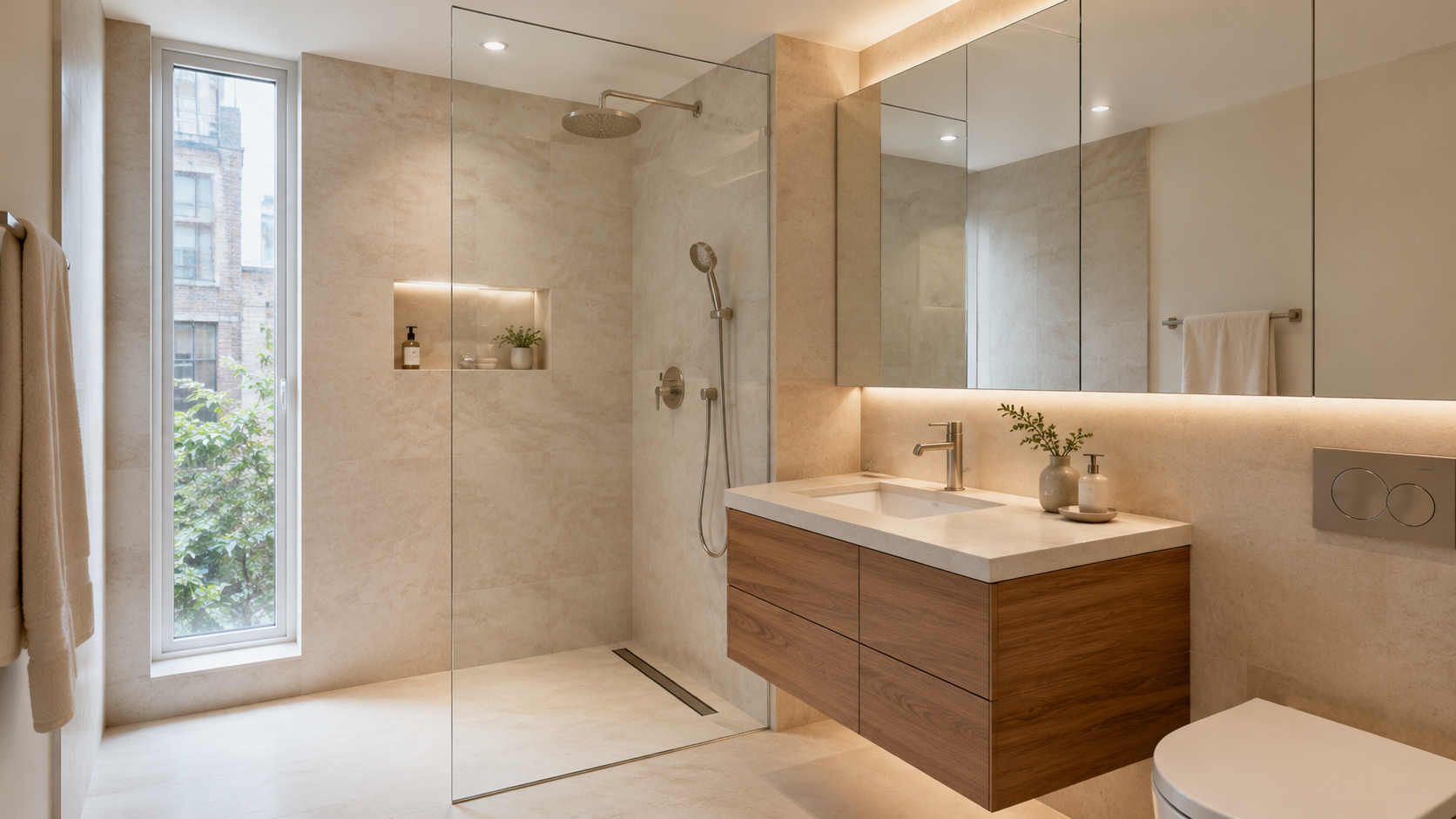
A small bathroom remodel doesn't have to feel like a compromise. The right layout changes, tile choices, and fixture upgrades can make a 40 sq ft bathroom feel significantly larger and function dramatically better. In New York and Connecticut homes, where tight bathrooms are the norm, these moves make a real difference.
Most small bathroom remodel guides are full of photos that look great and advice you can't actually use — like "knock out a wall" or "add a skylight." In a NYC apartment or a century-old Connecticut colonial with immovable plumbing, that's not on the table.
These 12 ideas work within real constraints. A few of them are design tricks. Most of them are structural decisions that change how the room actually functions.
1. Ditch the Tub for a Walk-In Shower
This is the single highest-impact change in a small bathroom. A standard tub takes up 13 to 15 square feet. Replace it with a walk-in shower and you gain usable floor space, the room opens up visually, and the shower itself almost always looks more finished.
A curbless (zero-threshold) shower makes the floor continuous and tricks the eye into reading the room as larger than it is. Pair it with a frameless glass panel instead of a door and the effect doubles. Full walk-in shower design options are covered in the walk-in shower ideas guide.
2. Go Floor-to-Ceiling with Tile
Stopping tile at the chair rail or at the standard 4-foot height cuts the room in half visually. Tiling all the way to the ceiling draws the eye up, makes the ceiling feel higher, and gives the room a finished quality that's hard to achieve any other way.
Large-format tiles (12x24 or bigger) with minimal grout lines amplify this further. Fewer grout lines = less visual interruption = more perceived space.
3. Use a Floating Vanity
A vanity that mounts to the wall instead of sitting on the floor exposes the floor plane underneath. Visible floor = more space, visually. A floating vanity also makes the room easier to clean, which matters more in a small bathroom than a large one.
For storage, go taller rather than wider. A narrow 18-inch vanity with a medicine cabinet above handles most of what a standard 30-inch vanity does in half the footprint.
4. Install a Recessed Medicine Cabinet
A surface-mount medicine cabinet sticks out 4 to 5 inches from the wall. A recessed one sits flush, returns that depth to the room, and provides the same storage. The rough-in work is straightforward in most frame-wall bathrooms. It's one of the better ROI moves on this list relative to cost.
5. Add a Niche in the Shower
A tiled niche built into the shower wall eliminates the need for a freestanding caddy or corner shelf — both of which clutter the shower and make it feel smaller. The niche sits flush with the wall. Tile it to match the surround or use a contrasting tile as an accent. Either way, it's cleaner.
6. Use Large-Format Floor Tiles
Small mosaic floor tiles were the standard for decades. The grout lines between them visually fragment the floor. Large-format floor tiles (12x12 minimum, 12x24 or 18x18 even better) reduce the number of grout lines and make the floor read as a continuous surface. The room appears bigger.
Diagonal installation adds another layer — it lengthens the perceived floor plane in both directions simultaneously. It takes a bit more tile and more cutting time, but the visual return is real. More on tile choices in the bathroom tile guide.
7. Replace a Swing Door with a Pocket Door
A standard door swinging into a small bathroom steals 8 to 12 square feet of usable floor space from any position it occupies in its arc. A pocket door slides into the wall. You get that floor space back, and the bathroom feels more open even before you touch anything else.
Pocket door installation adds to the rough-in cost and requires wall framing that accommodates the door track, but in very small bathrooms — under 50 sq ft — it often makes the layout functional where it wasn't before.
8. Mirror the Entire Wall Above the Vanity
One mirror over the sink is standard. A mirror that spans the full width of the vanity wall — or close to it — reflects the room back on itself and creates the perception of twice the depth. It also bounces light around in a room that usually has one small window or no window at all.
9. Maximize Vertical Storage
Floor space is limited. Wall space almost always isn't fully used. Tall linen cabinets, open shelving above the toilet, and hooks on the back of the door handle most storage needs without touching the floor footprint. In bathrooms where the only option is up, go up.
10. Choose a Pedestal Sink — or a Very Narrow Vanity
If storage is already handled elsewhere, a pedestal sink takes up significantly less visual and physical space than any vanity. The exposed plumbing can be a design feature with the right fixtures. Wall-mounted faucets free up the sink basin entirely.
If you need the under-sink storage, a 16 to 18-inch deep vanity instead of the standard 21-inch depth gets you meaningful floor space back without sacrificing the cabinet.
11. Improve the Lighting
Most small bathrooms have one overhead fixture and one light over the mirror. Both tend to be inadequate. Adding sconces on either side of the mirror eliminates the face shadows that a single overhead creates and makes the grooming experience significantly better. LED strips behind a floating mirror frame are a lower-cost version of the same effect.
Better lighting doesn't make the room larger, but it makes it feel less cave-like — which in a windowless NYC bathroom has a real impact on how the space reads.
12. Curbless Shower with a Linear Drain
A linear drain runs along one wall instead of sitting in the center of the floor. It allows the floor to slope in one direction, which simplifies the tile layout (no four-way slope to a center drain) and opens up tile design options. Combined with a curbless entry, it makes the bathroom fully accessible and creates a cleaner floor plane.
Linear drains work especially well in narrow shower conversions where the standard center drain layout is difficult to execute cleanly.
What to Prioritize in a Small Bathroom Remodel
If you're working with a limited budget and can't do everything at once, the moves with the highest visual and functional return in a small bathroom are: shower conversion (if you have a tub you don't use), floor-to-ceiling tile, and a floating vanity with recessed medicine cabinet. Those four changes alone transform how a small bathroom reads and functions.
Frequently Asked Questions
Q: How much does a small bathroom remodel cost in New York?
A small bathroom remodel in New York typically runs $8,000 to $25,000 depending on scope, materials, and whether plumbing is being moved. A cosmetic refresh (new tile, fixtures, vanity, no plumbing changes) starts around $8,000 to $12,000. A full gut renovation with layout changes runs $18,000 to $30,000+. See the full NY bathroom remodel cost guide for a detailed breakdown.
Q: Can I remodel a small bathroom without moving plumbing?
Yes, and for most small bathrooms it's the right call. Moving plumbing adds $2,000 to $8,000 in cost and significantly more time. Most of the ideas on this list — tile, vanity, lighting, storage, shower conversion in the same footprint — don't require touching the drain or supply lines.
Q: What's the best tile for a small bathroom?
Large-format tiles with minimal grout lines make the floor and walls read as continuous surfaces, which is exactly what you want in a small bathroom. Light colors reflect more light. Vertical tile patterns draw the eye up and raise the perceived ceiling height. See the full bathroom tile guide for specific options and layout recommendations.
Q: How long does a small bathroom remodel take?
A straightforward small bathroom remodel with no plumbing moves typically takes 1 to 2 weeks of active construction. Add a week or more if tile is being replaced floor-to-ceiling or if the shower is being converted. The bigger variable is lead time on materials — tile and fixtures can take 2 to 6 weeks to arrive.